




Process Overview
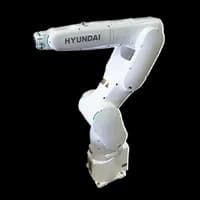
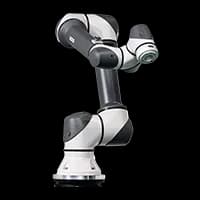
Philliper had been handling the process of inserting nuts into the machine tool manually. Due to the repetitive nature of the work and insufficient precision, this led to reduced productivity and quality issues. To resolve this, they implemented an automation solution using four Hyundai robots and two Doosan robots.
Project Background and Objectives
Background
Philliper was experiencing work inefficiency and inconsistent quality in the existing nut-loading operation due to a manual process.
Key issues
Speed loss and quality variation occurring during manual operations
Increased operator fatigue and reduced productivity
Operator burden caused by repetitive tasks in the nut insertion process
Objectives
Improve production efficiency by automating repetitive tasks through robot deployment
Secure consistent quality and reduce defect rates through accurate insertion
Improve the work environment by reducing operator fatigue and strengthening safety
Components
| Robot | Hyundai Robotics (HH020-03) Doosan Robotics (H2017) |
|---|
Workflow
| STEP 1. | Pick nuts from the feeder |
|---|---|
| STEP 2. | Insert nuts into the product hole inside the machine tool |
| STEP 3. | After receiving the machine-complete signal, unload the product |
| STEP 4. | Load the product onto the conveyor |
| STEP 5. | Repeat the same sequence with alternating operation. |
※ The content provided by Bigwave Robotics is protected under U.S. and Canadian copyright and intellectual property laws. Unauthorized reproduction, distribution, or use of this content is strictly prohibited.
Recommended Use Cases
ARC Welding Using the Rainbow Robotics RB-5
Process Overview This welding automation solution uses the Rainbow Robotics RB-5 and a NOUBELON DIGITAL MIG/MAG welder to weld cylindrical workpieces onto a plate, featuring fast teaching and high space efficiency. In manual welding, quality can vary significantly depending on operator skill, and the harsh working environment makes it difficult to secure experienced welders. With this cell, even non-expert operators can simply load and unload parts, while the robot performs the critical welding process—enabling consistent weld quality and stable production output.
Yuhan-Kimberly’s Choice: Fully Automated Depalletizing + Strap Cutting📦
Process Overview This deployment was implemented at Yuhan-Kimberly's Chungju Plant, delivering an integrated solution that combines a Yaskawa industrial robot with a strapping-cut workbench to automate depalletizing + strap cutting. The customer pursued a depalletizing system to reduce labor costs and operator fatigue, and showed strong interest in automating strap cutting and strap discharge to further maximize cost savings and operational efficiency. The solution handles mixed carton sizes by aligning (squaring) cartons, cutting and removing straps, and then feeding cartons into the case packer. This improves throughput and consistency in both carton infeed and strap removal, while reducing physical strain on operators and enhancing workplace safety. Project Background and Objectives At Yuhan-Kimberly's Chungju Plant, cartons arriving on pallets were previously broken down manually and then loaded one-by-one into the case packer. The work was highly repetitive, and manual strap removal using knives created a persistent risk of safety incidents. The objective of this project was to minimize reliance on manual labor by automating the entire process—from depalletizing through case packer infeed—and to achieve lights-out (unmanned) operation for strap cutting. This enables improved operator safety, reduced fatigue and staffing burden on the floor, and more stable, repeatable plant operations.

Box Pick-and-Place Automation Solution Using a Box Picker Gripper
Process Overview This deployment is a box pick-and-place automation solution using a Box Picker Gripper. As the name suggests, the Box Picker Gripper is designed to pick a wide range of objects. In this solution, it enables stable picking even when plastic boxes are open-top (without lids), improving handling reliability in box transfer operations.
Process Overview
Philliper had been handling the process of inserting nuts into the machine tool manually. Due to the repetitive nature of the work and insufficient precision, this led to reduced productivity and quality issues. To resolve this, they implemented an automation solution using four Hyundai robots and two Doosan robots.
Project Background and Objectives
Background
Philliper was experiencing work inefficiency and inconsistent quality in the existing nut-loading operation due to a manual process.
Key issues
Speed loss and quality variation occurring during manual operations
Increased operator fatigue and reduced productivity
Operator burden caused by repetitive tasks in the nut insertion process
Objectives
Improve production efficiency by automating repetitive tasks through robot deployment
Secure consistent quality and reduce defect rates through accurate insertion
Improve the work environment by reducing operator fatigue and strengthening safety
Components
| Robot | Hyundai Robotics (HH020-03) Doosan Robotics (H2017) |
|---|
Workflow
| STEP 1. | Pick nuts from the feeder |
|---|---|
| STEP 2. | Insert nuts into the product hole inside the machine tool |
| STEP 3. | After receiving the machine-complete signal, unload the product |
| STEP 4. | Load the product onto the conveyor |
| STEP 5. | Repeat the same sequence with alternating operation. |
※ The content provided by Bigwave Robotics is protected under U.S. and Canadian copyright and intellectual property laws. Unauthorized reproduction, distribution, or use of this content is strictly prohibited.
Related Use Cases
ARC Welding Using the Rainbow Robotics RB-5
Yuhan-Kimberly’s Choice: Fully Automated Depalletizing + Strap Cutting📦