




Process layout
Process Overview
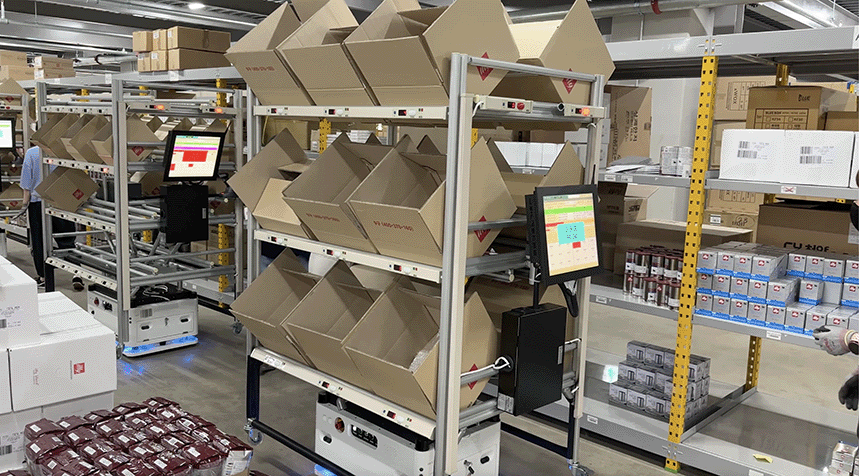
- This case study demonstrates an order picking system that optimizes the operation of ten Eugene Gocart 180s using Marosol's remote control system, SOLlink.
- With the self-developed SOLlink, multiple AMRs are clustered and controlled to maximize logistics system efficiency. The order picking system, integrated with WMS, allows for flexible handling during peak periods without the need for additional workers.
Warranty Period
- 1 Year
Performance Year
- 2023
Project Duration
- Need for consultation
Project Background and Objectives
- Improved workforce supply and employment stability through the introduction of logistics robots
- Introducing robots for high-intensity, repetitive tasks reduces the risk of musculoskeletal disorders and industrial accidents among workers
- Integrating WMS and order picking systems increases work efficiency and reduces error rates
Components
| Robot | Yujin Robot GoCart180 *10 |
|---|---|
| Peripherals | Integrated multi-robot system SOLlink
Upper module
Order picking cart
Middleware |
Workflow
| STEP 1. | A worker positions himself between the racks in the warehouse |
|---|---|
| STEP 2. | AMR loads the cart |
| STEP 3. | AMR passes the rack and stops at a designated location |
| STEP 4. | The worker loads items onto the cart |
| STEP 5. | When the cart is full, the AMR unloads the cart at a designated location. |
Features
- Connect to the entire conveyor line for high-capacity processing.
- The intuitive UX/UI of the OP panel allows for flexible support of various pallet/bag sizes.
- Using a product sorting device, a vision-free, low-cost solution is implemented.
Results
| Key Benefits | More than doubling the maximum daily order picking capacity per worker, expanding the use of robots in logistics warehouses, and reducing worker musculoskeletal disorders and turnover rates. |
|---|---|
| Client Feedback | The introduction of robots reduced workloads, leading to increased employee retention and a more flexible response to sudden increases in cargo volume. Notably, lower body fatigue was significantly reduced by eliminating the need to carry picked items. The logistics robot system, integrated with the upper-level WMS system, reduced human error and boosted customer satisfaction. |
Unauthorized copying or reproduction of any content on Marosol may violate the Unfair Competition Prevention Act and Copyright Act.
Recommended Solution

Full automation of injection molding line logistics with AMR logistics robots
Process Overview This case study demonstrates an inline logistics solution that utilizes the Yujin Robot GoCart180 and an upper conveyor module to automatically transport plastic injection products from the injection molding machine to the shipping facility. By developing a conveyor module tailored to the customer's production line, we automated product loading and unloading, achieving complete automation throughout the entire inline transport process without operator intervention. Warranty Period 1 Year Performance Year 2023 Project Duration Need for consultation Project Background and Objectives Injection molding manufacturing in-line labor shortage Factory operations are disrupted due to difficulties securing workers Workers avoid work due to the risk of musculoskeletal disorders and industrial accidents

Automated automotive battery palletizing: Safely stack batteries weighing over 60kg with the YASKAWA GP225 💪
This solution automates the repalletizing process for Atlas batteries produced by Hankook & Company for export. Due to the diverse import pallet specifications, customer-specific palletizing patterns, and product types, the total number of possible scenarios exceeds 200. The goal is to standardize these scenarios and ensure line stability by supporting a throughput of 10 pallets per minute for medium-sized batteries and 6 pallets per minute for large-sized batteries. [Pallet Feeder & Pallet Conveyor] This solution allows for the use of up to five different pallet types per country, ensuring a smooth 10-stack logistics cycle. Destacked pallets are transported to the battery palletizing position and aligned simultaneously. Completed pallets are transported to the discharge position. [Battery Sorter] Batteries fed inline are automatically sorted into 1st, 2nd (series/parallel), and 3rd layers according to the preset palletizing pattern. The robot then discharges the batteries, repeating the initialization process. [Robot Palletizer] Once aligned, the batteries are picked and placed at the palletizing position on the conveyor, repeating the pick-and-place process according to the specified location and number of layers. Honeycomb feeds are automatically inserted into each layer according to the settings. [Honeycomb Feeder & Sorter] Automatically sorts and inserts honeycombs into each layer of NO-BOX batteries.

Heavy logistics automation success! Omron AMR automatically returns lead tabs 📦🤖
Process Overview This case study demonstrates the automation of heavy-duty product transport using Omron AMR logistics robots . The client implemented a logistics automation system to reduce inefficiencies and labor burdens associated with repetitive, heavy logistics tasks. Specifically, they sought to reduce costs and maximize logistics efficiency through automated palletizing and return operations. This solution automates simple, repetitive tasks like product movement and loading, thereby increasing the efficiency and accuracy of the shipping process and reducing worker burden, thereby enhancing safety and productivity. Project Background and Objectives The client recognized the need for automation in heavy cart transport and lead tab return operations and sought to improve logistics operational efficiency and reduce operating costs by introducing AMRs. This project aimed to: Automating lead tab return and cart transport Improving worker productivity and ensuring safety Enhancing efficiency and flexibility in the logistics field
Process layout
Process Overview
- This case study demonstrates an order picking system that optimizes the operation of ten Eugene Gocart 180s using Marosol's remote control system, SOLlink.
- With the self-developed SOLlink, multiple AMRs are clustered and controlled to maximize logistics system efficiency. The order picking system, integrated with WMS, allows for flexible handling during peak periods without the need for additional workers.
Warranty Period
- 1 Year
Performance Year
- 2023
Project Duration
- Need for consultation
Project Background and Objectives
- Improved workforce supply and employment stability through the introduction of logistics robots
- Introducing robots for high-intensity, repetitive tasks reduces the risk of musculoskeletal disorders and industrial accidents among workers
- Integrating WMS and order picking systems increases work efficiency and reduces error rates
Components
| Robot | Yujin Robot GoCart180 *10 |
|---|---|
| Peripherals | Integrated multi-robot system SOLlink
Upper module
Order picking cart
Middleware |
Workflow
| STEP 1. | A worker positions himself between the racks in the warehouse |
|---|---|
| STEP 2. | AMR loads the cart |
| STEP 3. | AMR passes the rack and stops at a designated location |
| STEP 4. | The worker loads items onto the cart |
| STEP 5. | When the cart is full, the AMR unloads the cart at a designated location. |
Features
- Connect to the entire conveyor line for high-capacity processing.
- The intuitive UX/UI of the OP panel allows for flexible support of various pallet/bag sizes.
- Using a product sorting device, a vision-free, low-cost solution is implemented.
Results
| Key Benefits | More than doubling the maximum daily order picking capacity per worker, expanding the use of robots in logistics warehouses, and reducing worker musculoskeletal disorders and turnover rates. |
|---|---|
| Client Feedback | The introduction of robots reduced workloads, leading to increased employee retention and a more flexible response to sudden increases in cargo volume. Notably, lower body fatigue was significantly reduced by eliminating the need to carry picked items. The logistics robot system, integrated with the upper-level WMS system, reduced human error and boosted customer satisfaction. |
Unauthorized copying or reproduction of any content on Marosol may violate the Unfair Competition Prevention Act and Copyright Act.
Recommended Solution
Full automation of injection molding line logistics with AMR logistics robots
Process Overview This case study demonstrates an inline logistics solution that utilizes the Yujin Robot GoCart180 and an upper conveyor module to automatically transport plastic injection products from the injection molding machine to the shipping facility. By developing a conveyor module tailored to the customer's production line, we automated product loading and unloading, achieving complete automation throughout the entire inline transport process without operator intervention. Warranty Period 1 Year Performance Year 2023 Project Duration Need for consultation Project Background and Objectives Injection molding manufacturing in-line labor shortage Factory operations are disrupted due to difficulties securing workers Workers avoid work due to the risk of musculoskeletal disorders and industrial accidents
Automated automotive battery palletizing: Safely stack batteries weighing over 60kg with the YASKAWA GP225 💪
This solution automates the repalletizing process for Atlas batteries produced by Hankook & Company for export. Due to the diverse import pallet specifications, customer-specific palletizing patterns, and product types, the total number of possible scenarios exceeds 200. The goal is to standardize these scenarios and ensure line stability by supporting a throughput of 10 pallets per minute for medium-sized batteries and 6 pallets per minute for large-sized batteries. [Pallet Feeder & Pallet Conveyor] This solution allows for the use of up to five different pallet types per country, ensuring a smooth 10-stack logistics cycle. Destacked pallets are transported to the battery palletizing position and aligned simultaneously. Completed pallets are transported to the discharge position. [Battery Sorter] Batteries fed inline are automatically sorted into 1st, 2nd (series/parallel), and 3rd layers according to the preset palletizing pattern. The robot then discharges the batteries, repeating the initialization process. [Robot Palletizer] Once aligned, the batteries are picked and placed at the palletizing position on the conveyor, repeating the pick-and-place process according to the specified location and number of layers. Honeycomb feeds are automatically inserted into each layer according to the settings. [Honeycomb Feeder & Sorter] Automatically sorts and inserts honeycombs into each layer of NO-BOX batteries.
Heavy logistics automation success! Omron AMR automatically returns lead tabs 📦🤖
Process Overview This case study demonstrates the automation of heavy-duty product transport using Omron AMR logistics robots . The client implemented a logistics automation system to reduce inefficiencies and labor burdens associated with repetitive, heavy logistics tasks. Specifically, they sought to reduce costs and maximize logistics efficiency through automated palletizing and return operations. This solution automates simple, repetitive tasks like product movement and loading, thereby increasing the efficiency and accuracy of the shipping process and reducing worker burden, thereby enhancing safety and productivity. Project Background and Objectives The client recognized the need for automation in heavy cart transport and lead tab return operations and sought to improve logistics operational efficiency and reduce operating costs by introducing AMRs. This project aimed to: Automating lead tab return and cart transport Improving worker productivity and ensuring safety Enhancing efficiency and flexibility in the logistics field