


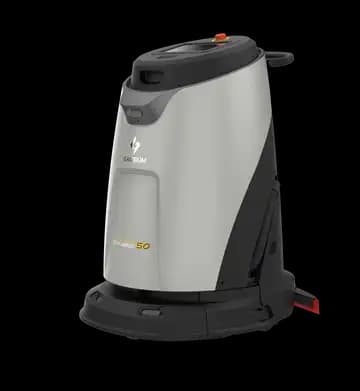

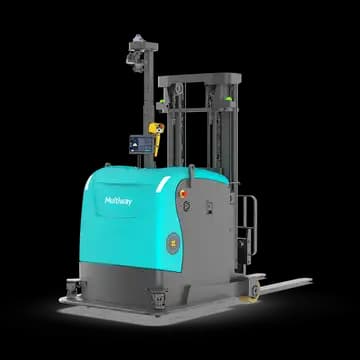
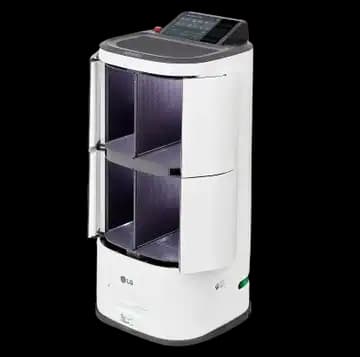

Curious about the robots deployed?

Process Overview
This case study features a large, cylindrical raw-material transport solution using OMRON AMRs. Previously, raw-material transport was handled manually, with operators physically rolling large cylindrical containers to move them. Due to operator fatigue and low handling efficiency in this workflow, an automation solution became necessary.
In this project, OMRON AMRs were introduced to automate raw-material transport, with the goal of reducing operator burden and significantly improving material-handling efficiency.
Project Background and Objectives
When raw materials arrived inbound in large containers, the manual transport process required high physical effort and carried a risk of injury. In addition, time loss and workload imbalance led to reduced productivity.
The objective of this project is to address these issues by deploying an AMR-based automation solution and realizing more efficient internal logistics operations.
Components
| Robot | OMRON AMR logistics robot: An AMR solution suitable for high-payload raw-material transport, maximizing stability and operational efficiency. |
|---|---|
| Peripherals | U-shaped top module: A custom U-shaped top module mounted on the AMR to securely carry and transport cylindrical loads, enabling safe and stable transport operations. |
Workflow
| STEP 1. | The AMR docks with inbound raw materials, safely loads them onto the U-shaped top module, and initiates transport |
|---|---|
| STEP 2. | Through AMR–automatic door integration, it passes through high-speed doors smoothly without manual operation |
| STEP 3. | The AMR interfaces with the elevator system to perform inter-floor transport |
| STEP 4. | The AMR safely places raw materials at the designated drop-off location. |
※ The content provided by Bigwave Robotics is protected under U.S. and Canadian copyright and intellectual property laws. Unauthorized reproduction, distribution, or use of this content is strictly prohibited.
Recommended Use Cases

Yuhan-Kimberly's Choice! Fully Automated Depalletizing and String Cutting 📦
Process Overview This implementation case, implemented at Yuhan-Kimberly's Chungju factory , combines a Yaskawa industrial robot with a string cutting workstation to achieve automated depalletizing and string cutting. The client introduced the depalletizing system to reduce labor costs and work fatigue, and expressed strong interest in automating rope cutting and discharge to maximize cost savings and efficiency. This solution sorts and cuts boxes of various sizes before feeding them to the case packer, improving the efficiency of the box feeding and rope cutting processes, while also reducing the physical burden on workers and ensuring safety. Project Background and Objectives At Yuhan-Kimberly's Chungju factory , the process of dismantling palletized boxes and loading them into case packers individually was entirely manual. This process was highly repetitive and presented a constant risk of safety accidents due to the use of knives during the removal of the twine. The goal of this project was to automate the entire process, from depalletizing to loading into the case packer, minimizing human dependence. Furthermore, by unmanning the twine cutting process, we aimed to ensure worker safety, reduce fatigue and on-site personnel burden, and ensure stable plant operations.

Full automation of injection molding line logistics with AMR logistics robots
Process Overview This case study demonstrates an inline logistics solution that utilizes the Yujin Robot GoCart180 and an upper conveyor module to automatically transport plastic injection products from the injection molding machine to the shipping facility. By developing a conveyor module tailored to the customer's production line, we automated product loading and unloading, achieving complete automation throughout the entire inline transport process without operator intervention. Warranty Period 1 Year Performance Year 2023 Project Duration Need for consultation Project Background and Objectives Injection molding manufacturing in-line labor shortage Factory operations are disrupted due to difficulties securing workers Workers avoid work due to the risk of musculoskeletal disorders and industrial accidents
Yaskawa Industrial Robots + Automatic Foam Placement — Hankook & Company Battery Palletizing Automation Case 🔋🤖
Process Overview Hankook & Company's palletizing solution prioritizes higher output and reduced labor requirements. After removing the existing line that was built around a single palletizer, the operation was split into two lines and reconfigured with two palletizers to secure production capacity (CAPA). In addition, manual placement of styrofoam and slip sheets was automated to reduce operator intervention—enabling one operator to manage both lines. Project Background and Objectives Background The previous workflow had an imbalance between line production capacity (CAPA) and palletizing capacity (CAPA), requiring operators to manually support styrofoam and slip-sheet placement to maintain output. This structure forced continuous loading of slip sheets (approx. 7 kg each), causing significant operator fatigue. Also, the line had to wait until manual slip-sheet loading was completed, leading to large fluctuations in the logistics cycle time. Key issues Palletizing quality instability and speed loss caused by manual operations Reduced productivity, increased operator fatigue, and skilled-labor dependency issues Objectives Improve production efficiency by minimizing repetitive manual tasks through upgraded robot automation Ensure quality consistency by reducing manual intervention Improve the work environment by reducing operator fatigue and strengthening safety
Process Overview
This case study features a large, cylindrical raw-material transport solution using OMRON AMRs. Previously, raw-material transport was handled manually, with operators physically rolling large cylindrical containers to move them. Due to operator fatigue and low handling efficiency in this workflow, an automation solution became necessary.
In this project, OMRON AMRs were introduced to automate raw-material transport, with the goal of reducing operator burden and significantly improving material-handling efficiency.
Project Background and Objectives
When raw materials arrived inbound in large containers, the manual transport process required high physical effort and carried a risk of injury. In addition, time loss and workload imbalance led to reduced productivity.
The objective of this project is to address these issues by deploying an AMR-based automation solution and realizing more efficient internal logistics operations.
Components
| Robot | OMRON AMR logistics robot: An AMR solution suitable for high-payload raw-material transport, maximizing stability and operational efficiency. |
|---|---|
| Peripherals | U-shaped top module: A custom U-shaped top module mounted on the AMR to securely carry and transport cylindrical loads, enabling safe and stable transport operations. |
Workflow
| STEP 1. | The AMR docks with inbound raw materials, safely loads them onto the U-shaped top module, and initiates transport |
|---|---|
| STEP 2. | Through AMR–automatic door integration, it passes through high-speed doors smoothly without manual operation |
| STEP 3. | The AMR interfaces with the elevator system to perform inter-floor transport |
| STEP 4. | The AMR safely places raw materials at the designated drop-off location. |
※ The content provided by Bigwave Robotics is protected under U.S. and Canadian copyright and intellectual property laws. Unauthorized reproduction, distribution, or use of this content is strictly prohibited.
Curious about the robots deployed?
Related Use Cases
Yuhan-Kimberly's Choice! Fully Automated Depalletizing and String Cutting 📦